Workshop Journal No. 001
Bringing the cedar chest home... discovering its history

The 1943 Lane cedar chest as I brought it home—damaged veneer, a beautiful cedar interior, and plenty of questions.
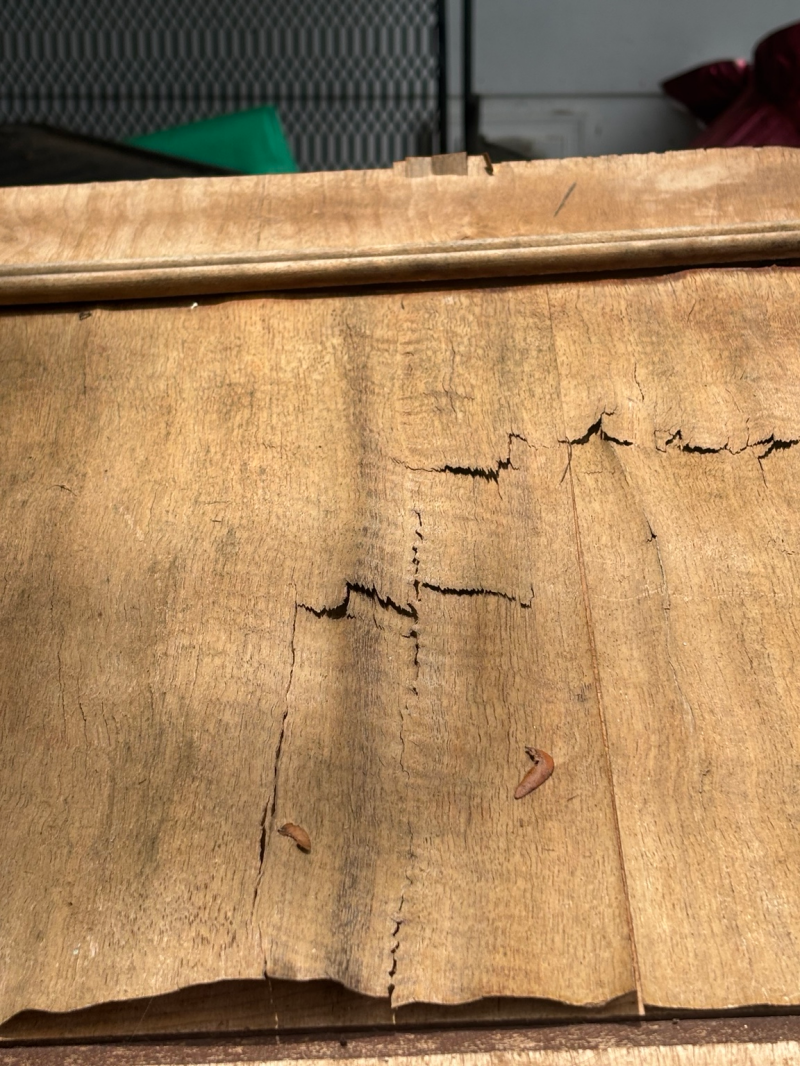
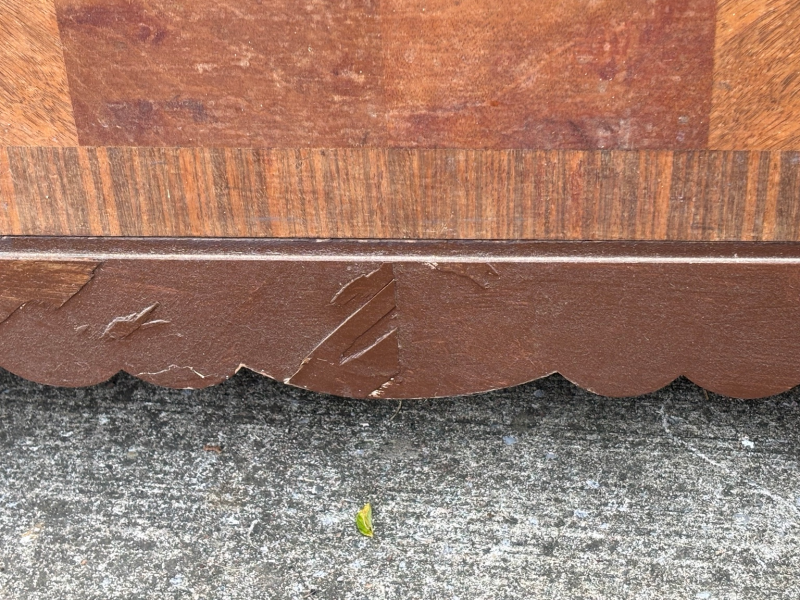
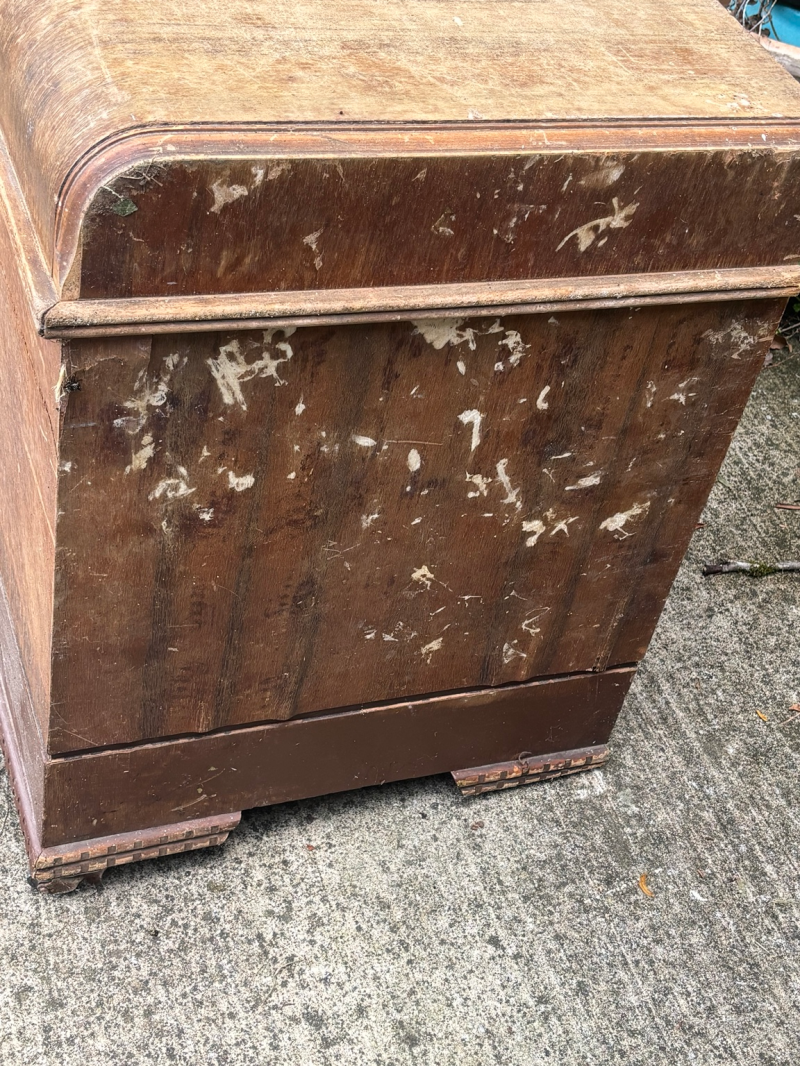
I found this locally in East Tennessee from Facebook Marketplace for $15. It has extensive veneer damage, but the chest itself is solid and the interior is in really great shape. It has the original key and paperwork. The veneer however, well, I will be learning a new skill with this project!
Curiosity
When I find a vintage or antique piece of furniture, I want to find out everything I can -- how old is it? how was it made? what is its history?
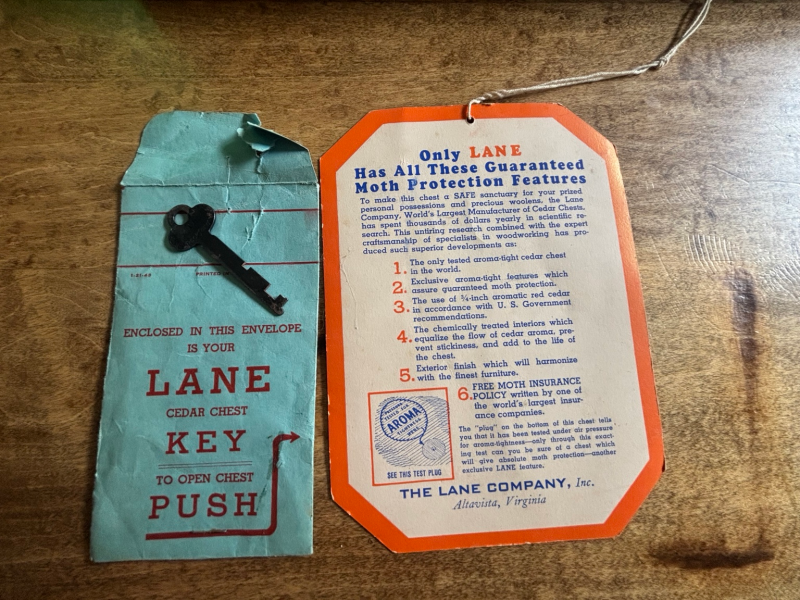
Opening this cedar chest once I got it home, I found an envelope with the original key!
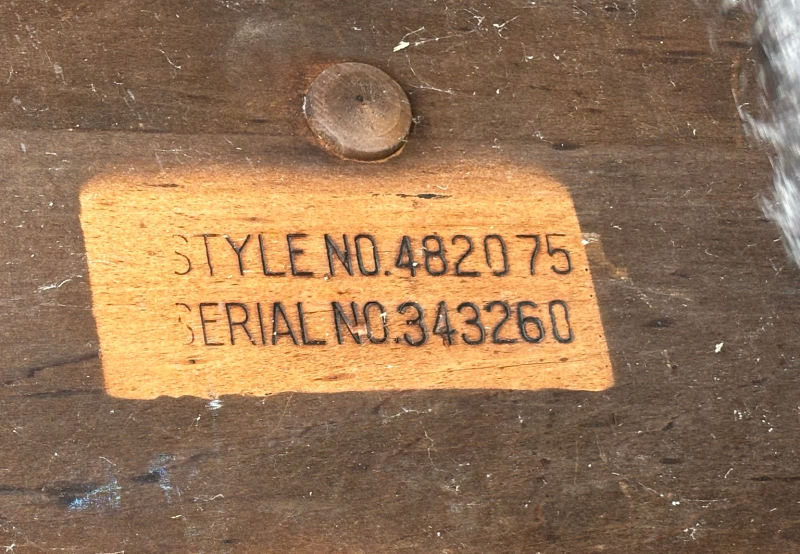
Next was finding the style and serial numbers on the bottom: Style No. 482075 and Serial No. 343260
I found out that the serial number tells us when this cedar chest was built: Lane Furniture stamped production dates in the reverse order on the bottom or back of the chests! So, the serial number 343260 backwards, tells us that this cedar chest was built on June 23, 1943!
Wartime
This cedar chest has fascinating historical context tied directly to World War II manufacturing constraints and the height of American Art Deco design. During WWII, metal (especially brass, copper, and iron) was strictly rationed for the military. Furniture makers like The Lane Company had to rely heavily on wood, wood-composite handles, or minimal steel. While Lane spent much of WWII fulfilling military contracts to build pine ammunition boxes, they kept a limited civilian furniture line active. A domestic cedar chest was a rare luxury item to find brand-new in 1943.
In 1943, these chests were marketed heavily as "Hope Chests" to young women. During the height of WWII, women used chests exactly like yours to collect linens, photos, and clothing while waiting for their sweethearts to return home from the war.
Starting the Restoration:
Now that I have some history for this cedar chest, I can begin to plan its restoration! I hope to restore this as close as possible to its original veneer patterns. I've not worked with veneer before other than very minor repairs on a small area. Looking at this chest closely, all veneer will need to be removed and replaced, so I will be investing time to learn this new skill. Maybe find a local class to take to learn to apply veneer.
For now, I'll start the process to clean the interior and exterior, and remove the veneer (carefully cataloging each side through photography) and make any structural repairs to get ready to replace the veneer as close as I can to the original as it was back in 1943!
See you in the next blog!
Add comment
Comments
This will be beautiful when it's finished. Do you plan to paint any parts of it?